Showing posts with label slasher. Show all posts

Tuesday, April 17, 2012

Legend of the Psychotic Forest Ranger (2011)

Does the world need another send up of slasher movies, given that so many slasher films post-Scream already have their tongues in their cheeks? Actually, do we need another one after the 1982 send up Student Bodies? Probably not, but it sure helps that this one is fairly amusing and has a good eye for the details of those eighties stalk-and-slash epics that made so many of them so cheesy in the first place. The filmmakers do a good job of picking out bits of dialogue that we’ve heard a million times without notice and giving them a humorous spin. They're also good with little background gags.

The psychotic forest ranger in question is played by Aaron Corbett as one of those guys who takes his job way too seriously. In credits footage, it’s explained that he was studying for the seminary and decided to do God’s work as a forest ranger instead and went missing after a horrible fire. In keeping with the slash film tradition, the back story doesn’t make much sense, but it’s a good character and the filmmakers are already trying to rally support for more psychotic forest ranger films, which one supposes hearkens back to the slasher film convention of franchising the shit out of characters. That got old pretty quickly as I recall.

The nice thing about this flick is that it doesn't hammer you over the head with the jokes; it's a lot more wry than the Not Another ____ Movie school of "Hey! Here's the joke! Look here!" parodies. There were three gags that I liked quite a bit. The first has to do with the characters- the film is about a group of friends heading into the woods to celebrate graduating from high school. We have a jock, his prankster buddy, an uptight and paranoid brunette, and her vain and shallow friend, which is basically the group of friends in all these movies. About halfway through, they run into another group of friends: a jock, his prankster buddy, an uptight girl, and her vain, shallow friend. In the second gag, as their friends go missing, the group comes up with increasingly implausible explanations for what's going on, one of which has to be dramatized because it's so convoluted. Finally, there's a nice running joke in which characters turn off the radio bored right when the newscaster is announcing really pertinent information.

For the downsides, well, I would have enjoyed it if they'd featured some of the rampant and irrelevant-to-the-plot nudity of those slasher flicks; I' m guessing it's harder to get your friends naked on screen in the era of internet screen captures. Also, the gore could have been a bit more plentiful or even semi-realistic without hurting the proceedings. Finally, we all know how I feel about digital video, although of course a film with this low a budget isn't going to have access to film.

As you can imagine, alcohol serves as fuel for these proceedings- the amount of booze you consume beforehand will determine how long you find this funny. I was about half-lit during the Shock Stock screening, so I was laughing almost through the second act and it picked back up in the third. It’s definitely a very amusing homage to slasher flicks and I’m pretty sure fans of the genre will get a kick out of it. I also suspect it will reward repeated viewings.


But, if we’ve learned anything from the Scary Movie series, it’s that you can only return to the well so many times with this stuff. The filmmakers have shown a sure hand with their material on this one and it would be great to see what else they can do. Unfortunately, while the filmmakers have said you can head to their Facebook page (of course) to show support for more psychotic forest ranger films, they haven’t one for, “It was funny once, but now try something different.”

Tuesday, March 20, 2012

Terror (1978)

Yeah, I know- I suck at blogging regularly. This is because I am lazy and booze makes me lazier.

Okay, 1978's Suspiria homage Terror is good bloody fun in a totally daft and illogical sort of way. But, let's be honest, Suspiria is also good bloody fun that's totally daft and illogical.

The film begins with an effective credit sequence featuring creepy pictures of people in pain and somewhat prog rock organ music. Then, bam, we get a mob of angry villagers with torches hunting down a woman and preparing to burn her as a witch. Before they can get that done, though, she screams, "Master, help thy servant!" and the lot of them get lit up instead. They finally get her burned up, but she shows up in a noblewoman's house, vows to curse her bloodline, and lops off her head!
And then we discover it was all a movie made by some 70s hip young people in the old house where it really happened. They're all English, so they call each other "dear" and "love" constantly, but otherwise they're the usual drug-taking, sexually promiscuous, ready-made victims. However, two of them were actually related to the cursed bloodline and the story was true. And the curse is real!

Before too long, Ann, a cute bird from that cursed line who's been hypnotized for a party trick picks up the sword and tries to carve up a fellow- sorry about that, love! And then another bird wandering in the woods gets a bit of the old stabby stabby and is left pinned to a tree. I suck at British slang as well as blogging.

What follows is a mild parody of the world of 70s filmmaking with a good amount of stalking and slashing. The slashing part is surprisingly gruesome and lovingly detailed; director Norman J. Warren was somewhat known for his love of the red stuff. And he uses it well here. The film is rather light on sex, but there is a nice bit with a "punk rock" stripper that sets the film firmly in 1978. There's also a mystery afoot because we don't know if Ann's bonkers and killing people, there's someone else doing so, or it really is the witch's curse.

Actually, I'm not entirely sure what was going on with all the bits in the movie. The film goes from supernatural mumbo jumbo to typical slasher film and then, suddenly, back to supernatural mumbo jumbo with everything in a sound-stage coming alive and attacking a character. There's also a woman stalked by a levitating car- seriously. All of this is great, but who was doing the stabbing? Why is the witch who shows up the same woman as the fictional movie-within-a-movie? What the fuck was going on with that levitating car? And, seriously, if this is a bloodline curse, why do all those people not related to the family get killed?

Friday, October 28, 2011

I Saw the Devil (2010)

After showing up Hollywood action flicks with The Good, the Bad, the Weird, Kim Ji-woon basically showed up Quentin Tarantino by making a frenetic, stylish, over-the-top, and grisly revenge epic that has something Tarantino's last three revenge epics lacked altogether: a sense of moral seriousness. In a lot of ways, a movie like I Saw the Devil shouldn't work as well as it does- it's tone shifts wildly from somber tragedy to cartoonish violence in a way that should alienate us. But it does work, largely because it never loses sight of the underlying sense of loss and sorrow. Its protagonist is a recognizable human falling apart under the weight of his loss. By contrast, Beatrix Kiddo is a pop archetype and already feels dated and hackneyed. This is the real story.

Revenge is, of course, a story as old as the Athenian tragedians. A dish served best cold it might be, but it makes server and eater sick alike. No good deed of vengeance goes unpunished in the Greek tragedies and Ji-woon is as cruel and penetrating as they were in showing how the desire to get revenge for a horrible misdeed can make the victim as horrible as the perpetrator. Ji-woon has called the film an Oriental Western and it reminds me of a Western like the Searchers and just how Greek the Westerns were. So, a Hellenic-Oriental Western!

When her car breaks down, a young woman is abducted, tortured and beheaded by Kyung-chul (Choi min-sik) a middle aged serial killer in a truly horrifying opening sequence. Her fiance Soo-hyun (Lee Byung-hyun), who talked with her on the phone right before the killing, is haunted by the killing and takes time off from his position as a federal agent to track down the killer and pay him back for the killing. Planting a GPS tracker on him, Soo-hyun plays a game of hunter and prey, letting him go repeatedly to track him down again and torture him some more.

But, the serial killer has plans of his own and doesn't like being screwed with. Choi min-sik (from Oldboy) plays the killer as a sort of irritated, tired, asshole who thinks he has the right to do as he pleases to others. A scene in which he torments a poor secretary builds a great deal of tension, beginning with the mere sense that he just doesn't care about social niceties.

Gradually, Soo-hyun follows suit, moving farther and farther outside of the law in his attempt to transfer some of his crushing pain to Kyung-chul. He is warned that "revenge is just for movies", but can't seem to change the direction he's headed. When Kyung-chul finally tries to turn himself into the police, Soo-hyun won't let him! An attempted telephone intervention scene in the third act gives the story a surprising gravity. But the action is as frenetic as anything in The Good, the Bad, the Weird- a stabbing scene in a moving car is absolutely eye-popping. It is clear why Kim Ji-woon has become a cult favorite director.

Aside from being a tad long, I can hardly recommend this movie enough. It's shocking, brutal, strangely funny, action-packed, and surprisingly moving. More importantly, it has something that Tarantino's revenge epics lack altogether: it has a perspective.

Wednesday, October 19, 2011

A Lizard in a Woman's Skin (1971)

One of Lucio Fulci's most enjoyable movies, Lizard in a Woman's Skin tells the sordid tale of Carol (Florinda Bolkan), a wealthy barrister's daughter and respectable society woman with a disturbing problem: she keeps having wet dreams about screwing the hot bohemian chick (Anita Strindberg) in the flat next door during wildly surrealistic orgies. Admittedly, most of us wouldn't consider that much of a problem, but it becomes more so after Carol makes what her analyst considers a breakthrough by dreaming about killing the neighboring harlot, who then actually turns up dead. Damned Freudian psychology always makes shit worse!

Carol has other problems, including the fact that her husband Frank is screwing his secretary. Then she spots two hippies from her dream walking around London, chases them down, and finds they have no recollection of the killing. The police focus their investigation on her and she gets locked up, but soon there are hippies showing up to snuff her. Is there an evil conspiracy trying to ruin her life? Or is this a story about the psychological damage inflicted upon a woman by sexual repression and upper class hypocrisy? Maybe a little bit of both!

Lizard in a Woman's Skin is sort of Fulci's psychedelic mod mystery flick and two things help him here: the Swinging London setting, which allows for him to slip in his usual surrealistic weirdness, and the mystery plot, which forces him to stick to a coherent narrative. The Ennio Morricone score is great too, of course. I don't know that I'd consider most of Fulci's movies to be giallos, although this one definitely is; and I'm not actually a fan of most of his movies. Granted, City of the Living Dead holds a special place in my heart as the first horror movie my parents let me watch (at age 8! Thanks Mom and Dad!), but Fulci has an irritating tendency to shoot gore scenes with extremely long closeups that start to resemble the boring snatch shots in porn flicks. The problem with filming someone getting killed in slow, long closeups is you start wondering Why the hell are they just sitting there getting killed? Here, the gore is minimal and therefore more effective. There was a scene with some mutilated (fake) dogs that was a bit barf-inducing, but otherwise it's more like a real movie.

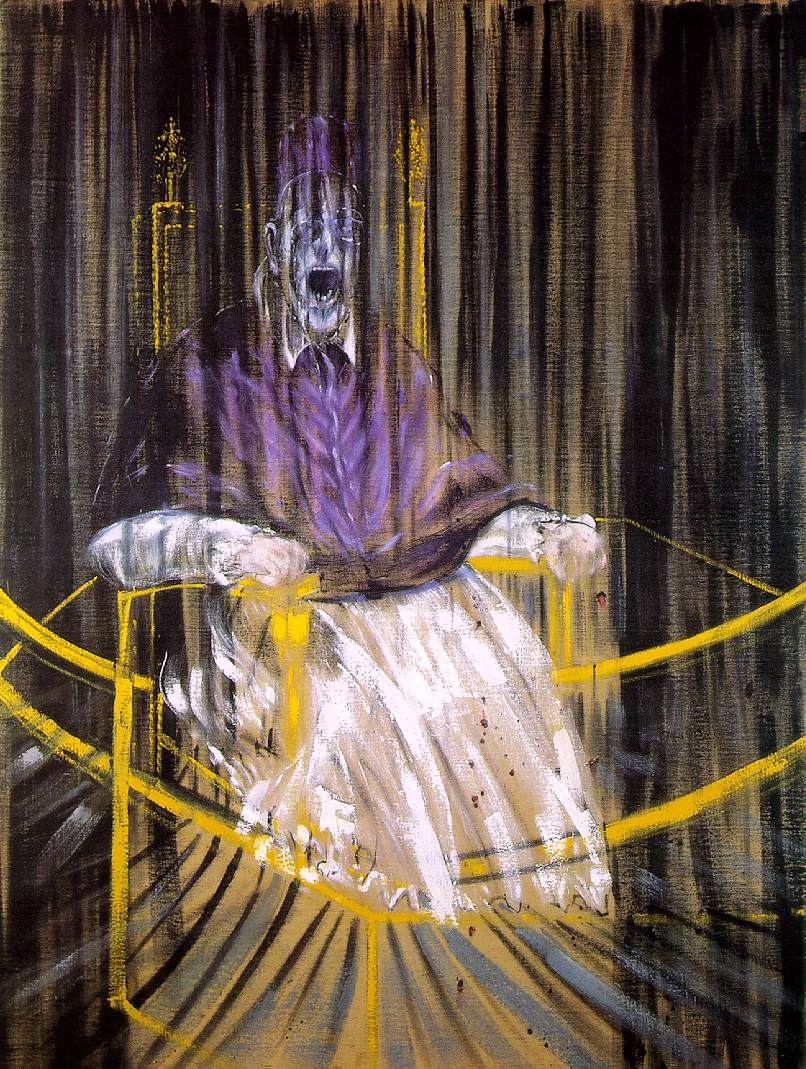
Even better, the LSD shenanigans allow Fulci to cram in lots of wacko style and filmmaking bravura. At one point, he pays homage to Francis Bacon's famous portrait of Pope Innocent X. At another, a trip through a crowded train becomes a crowded orgy! The hippie LSD party is a particular highlight. And you also have plenty of female flesh on display. What else could you want? (Maybe a bit less talking and police procedural stuff, but otherwise it's fun.)

Sunday, October 2, 2011

My Bloody Valentine (1981)


After I moved to Canada, I learned a whole other way to look at movies: are they openly Canadian or secretly Canadian?

A ton of movies are shot up north, either by American or Canadian production companies, and the difference seems to be between ones like Juno or Meatballs that don't acknowledge their Canadian parentage, and those like The Fly that don't exactly hide it, which stirs the pride of Canadian genre fans. My Bloody Valentine is an example of the latter: on more than one occasion, I've heard it described as the "Canadian slasher movie". Now, having first watched the movie in America, I never noticed that it isn't set in an American town. It always looked that way to me. But, for Canadians, it's obviously set in Canada. Basically, the accent that Americans can't quite place is from the maritime provinces instead of New England, and it actually is meaningful that everyone drinks Moosehead in the film- very meaningful. This is what Canucks see as most characteristically and unmistakably Canadian- the beer!

So, I'm going to take their word for it. My Bloody Valentine is a slasher film set in a working class Canadian town (obviously!) defined by its coal mine. Years ago, there was an explosion in the mines that made one the one surviving miner eat his dead colleagues and go crazy (and one thing is for sure about slashers: they just can't let shit go!), and so he put on the scary miner outfit and started a killing. He killed the foreman who left the mine early for the Valentine's Dance and killed the dude on Valentine's Day and he has a thing against the Valentine's Dance (another thing about slashers- they pick a holiday and really watch their calendars!). Now it's the 1980s present day and they're thinking of holding another Valentine's Dance. Those damned fools!

On top of this, you have a love triangle going on. T.J. left the shit hole town for California (no mention is made that he went to another country. Just saying) to make it big as a professional flautist (just kidding) and now he's back with hat in hand to work in his dad's mine. Lisa, his old girlfriend has since shacked up with his old buddy Axel, and now she can't decide which dick she wants. So the two friends are fighting over her throughout the movie, pussy being scarce in Nova Scotia, and meanwhile the Mayor and Sheriff are trying to handle the series of killings that just keep happening and trying to find out if that crazy miner is still in the mental institution or not.

A lot of people say that My Bloody Valentine is their favorite slasher film and I can see the appeal- you've got a good small town romantic drama set in a working class milieu, a clever psycho on the loose story, and lots of nifty gore effects by Thomas Berman and his crew. The effects, incidentally, were only recently released via Lion's Gate DVD; the original film was hacked to bits by the ever-cowardly Paramount Pictures in order to appease the MPAA. There's also a great folk song about the killer over the end credits. And, frankly, after all the dumb suburban brats getting killed in slasher movies, it's fun to see blue collar kids with blue collar problems for once.

The problem, for me, is that the killer looks cool, but he's yet another faceless psycho for the most part, and the main characters, while not as insipid as the usual slasher victims, aren't that interesting. I don't really care which dick Sarah chooses, although we all know she's going to pick her first love in the end. Ultimately, slasher films are hard for me to get into because they're so formulaic that I know exactly what's going to happen next for 90% of the running time. I'll agree though that My Bloody Valentine is much better than average (unless your average is Halloween). Way to go, Canadians!

Savage Intruder (1970)

The Savage Intruder starts with a great credit sequence of the decrepit and rotting Hollywood sign panning down to a severed head and hands lying in the dirt below. It's a nice visual commentary on a Hollywood studio system that knows where to bury its bodies. Also, it introduces us to a serial killer who is slashing up older women in the Hollywood Hills, which makes sense because the young ones run away a lot faster in the usual slasher flick. It's a wonder nobody thought of this before. He's played by David Garfield, son of screen legend John Garfield, and we see him follow an old lady home from a bad and cut her up in her bathroom early in the film so there's no mystery about that. The opening scenes, though, are both pretty grim and gruesome, setting up a tone that the movie doesn't really maintain.

Instead, the film shifts into Hollywood Boulevard/Whatever Happened to Baby Jane? mode as the young punk slasher, Vic, turns his attentions to aged former movie star Katherine Parker, played by real life elderly ex-movie star Miriam Hopkins (from Dr. Jekyll and Mr. Hyde among others). Her glory days solidly behind her, now she spends her days in a vast and creepy mansion drinking heavily and imagining she's at the gala balls that have since ended. Introducing himself as Laurel N. Hardy, the hippie slasher gets a job as a personal assistant for the old biddy, which we know won't go well.

The movie plays up the arrogance of the 60s generation against the decrepit glamour of 1930s Hollywood. Vic gets under the skin of the house matron played by Gale Sondergaard and into the panties of the Asian maid Greta who he calls "my little fortune cookie". He also shoots up and hallucinates about running down a cool endless day-glo checkerboard hallway to a room where his mother is having a sexual rendezvous with five guys before the child Vic chops her hand off with a hatchet. Mamma was a whore and a lush and now Vic kills older matronly women- Freud would get it. Throwing a spanner in the works, Katherine jumps his bones and falls in love with the young punk. Cue the acid rock!

So psycho Vic's plan is to turn the old bat into a sugar mamma and he's willing to kill anyone who gets in his way. Instead of being a "savage intruder", he's really more of an opportunist with a psycho streak and a genuinely creepy character. Katherine, meanwhile, is a delusional alcoholic in the Gloria Swanson mode. She was always big; it was the killer hippies that got small! Things get sufficiently gory in spots and really weird in others. In one great sequence, Vic takes Katherine to a hippie drug party where she encounters a drug pushing midget, black and gay stereotypes, crazy wallpaper, and the cast of Laugh-In basically. In another, she gets drunk at the late night Christmas parade and bitches to a television reporter about the "queers" on Hollywood Boulevard.

For about the first hour, this contrast between the psychedelic generation and the older lonely booze hound works pretty well. Like The Night God Screamed, the older set's fears about the hippie creeps are totally justified here! The gore effects are surprisingly good, considering it was filmed in 1969. Eventually, though, it starts to run out of steam, right about the point Vic starts holding Katherine hostage. The last half hour really repeats itself. One also the unmistakable feeling of having seen all of this before in some classic movies. Also the last half hour really repeats itself. (Ba-dum-tish!) Anyway, it's still worth a rental if you've ever wanted to see a gorier drug era version of Whatever Happened to Baby Jane?. Actually, it's not on DVD, so you'd have to find a place that rents VHS, or rents movies at all anymore. God, now I feel like an old timer!

Friday, September 23, 2011

The Headless Eyes (1971)

If you were a single lady and you woke up with a cat burglar robbing you, what would you do? Grab a spoon from the night stand and scoop out his eyeball, right? Well, that's exactly what happens to Arthur (Bo Brundin, who appeared the next year in Jerry Lewis's lost Holocaust epic The Day the Clown Cried) in the beginning of The Headless Eyes (there's a great band name for you), Kent Bateman's serial killer opus from 1971. The lady in question removes his eyeball, setting him off on an ill-fated obsession with getting people's eyes and saving them in his shit hole apartment that rivals the one in Eraserhead for sheer grubbiness. Some he keeps frozen in blocks of resin in the freezer. He's also an artist.
Arthur is unsuccessful as an artist, but surprisingly successful in killing, bludgeoning to death a married couple that let him into their house because they remembered him fondly from staring insanely at them on the street! The gore is darker and more realistic than the usual poster paint red used in horror movies from the era and the killing scene is fairly disturbing. Cementing the sense that New Yorkers in the 70s were dumb as a brick, Arthur is soon picked up by a hot blonde hooker in a miniskirt moved by the sight of a mumbling manic stranger covered in blood on the sidewalk and does what you'd expect. The new tourism slogan should be "New York: We make killing easy!"

His ex-wife comes back to save him from his self-imposed exile and "from whatever it is that's changed you". She doesn't even ask where his eye went. In response, he rants for quite a long time about the finer points of madness in a scene that perches right on the line between creepy and melodramatic. Much of the movie maintains a squalid, gritty tone helped a lot by the fact that it was clearly made for a few thousand bucks at most. Later, a young artist approaches him and seems to offer, briefly, the hope of a better life- one with less eye-gougings.

There are also some nice touches. Arthur hangs out in the crowd of neighbors being interviewed by a news reporter about the killings. There's a senile old lady who sits on the sidewalk mumbling, "I know who did it!" At one point, Arthur has a hallucination in which he's running around the streets dressed in white. Throughout, there is some fairly effective psychedelic jazz on the soundtrack. It's not a completely artless film, although it has its share of poorly composed, out-of-focus shots and meandering sequences.

The problem is that the story itself meanders way too much. Arthur kills a woman, does some stuff at home, kills another woman, does some other stuff, and so on and so on. What's wrong with Arthur is never really explained, although the police detective's explanation for the killings is great: "God knows. Some kind of pervert, demented, I don't know." The killer talks to himself a lot and offers the explanation, "I... am... twisted!" at one point. That's pretty evident, thanks. He seems to hate women, probably thanks to losing his eye, and kills plenty of them. But the somewhat mellow jazz and focus problems kill any tension and the film drags. Not a lot really happens. It was just weird and disturbing enough to watch once, but that's about it.

Stagefright (1987)

>Stagefright begins with a great sequence in which a hooker on a city street is strangled in an alleyway, bringing out the neighbours to investigate, before suddenly turning into a stylish dance number lead by a killer in an owl head mask. We’re in the rehearsals for a new musical play and the moody director Peter (David Brandon) is feuding with the money-conscious and actress-ass conscious financer (Piero Vida) and the cute lead actress Alicia (Barbara Cupisti) who is struggling to play a whore. There’s also Brett (let’s give it up for Italian horror stalwart Giovanni Lombardo Radice) the bitchy gay lead, Laurel (Mary Sellers) a slutty young actress, Sybil (Jo Ann Smith) a supporting player dealing with an unexpected pregnancy, and all of the ordinary madness that one deals with in the theatre.

To make matters worse, a notorious maniac escapes from the nearby mental institution and hitches a ride to the theatre from the actresses who’d stopped by for attention to a twisted ankle in a very implausible plot twist. Soon theatre folk start dropping like melodramatic flies and Peter the director, smelling a publicity windfall, starts rewriting the script to parallel the killer on the loose!

Argento protégé Michael Soavi directs this stylish giallo like a backstage soap opera with killings. Giallos were one of the sources for the slasher films of the 80s and they usually play like slasher films with prog rock and adults instead of dumb teens buying the farm. Soavi handles the set pieces with a decent level of panache and the theatrical angle is a cool twist- before long, the real killer is showing up on stage and stabbing an actress to death in full view of the cast and crew! The gore effects are clever and plentiful; in one great bit, an actress is pulled down through a rotten wooden floor and retrieved in half.

The film uses some of the usual dumb slasher tropes- does every social group have at least one prankster who can actually be assumed to be pulling pranks when there’s a killer on the loose? Couldn’t the police have assigned more than two fat and lazy cops to guard a theatre where it’s known a psychopathic killer is prowling? Why do these killers become suddenly much less effective at stalking and killing when they get to the last woman alive? But it also has a fair level of atmosphere and some good tense scenes and enough good gore effects to make up for the usual plot holes.

Thursday, July 21, 2011

Sleepaway Camp (1983)

Today hailed as a “cult classic”, which is really just a nice way of saying, “a bad movie that’s also sort of weird”, Sleepaway Camp was originally just another Friday the 13th rip off- a movie that honestly doesn’t seem too original itself if you watch it directly after watching Halloween. However, what distinguished Sleepaway Camp from the horde of slasher flicks of the era is that although the movie has all sorts of flubs and problems, it’s just sort of weird, particularly in its bizarre ending and homosexual subtext. I think people remember it for years just because they’re still asking themselves, “What the fuck was that about?”

These movies usually begin with a series of tragic events that happened in the past. In this case, eight years ago some dumbass kids from the local camp were dicking around in a motorboat in the lake when they ran over some kids with thick New Yawk accents. Sample dialogue: “Peetuh stahted it!” “Did not, you lie-uh!” The father is killed and one of the kids dies and whoever survived something like that would probably be a homicidal maniac, right? Probably so.

Anyway, flash forward to eight years later and the survivor, Angela, played by Felicia Rose, is heading off to camp with her cousin Ricky (Jonathan Tiersten), chaperoned by his nutty mother (Desiree Gould) who behaves like Little Edie in Grey Gardens with another couple more screws loose. She’s somehow secured physicals for the two kids without taking them to a doctor and we soon realize that there’s something wrong with Angela. She doesn’t eat, hardly talks, stares a lot into the distance and seems more than a little disturbed. Felicia Rose was a new actress but already played creepy well. She’s pretty much the best part of the film.

When the kids get to camp, Ricky has to protect Angela from the abusive fellow campers, particularly the cuntish Judy (Karen Fields) and the bitchy counselor Meg (Katherine Kamhi). There’s also a weird love subplot in which Angela can’t fool around with the one boy at camp who likes her because she once saw her dad and another dude getting it on. It’s sort of a shitty camp anyway: one of the cooks openly jokes about molesting the pubescent campers, the counselor abuses Angela, Mel (Mike Kellin), the owner, covers up the inevitable killings and beats up Ricky suspecting him. And, naturally, people start getting killed off one by one: the pervert cook gets boiled alive with a huge pot of water, one bully kid gets drowned, another bully gets a hornet’s nest dropped on him while he’s taking a “wicked dump”, and so forth. The effects, by Ed French, are pretty much Savini-level, which helps a lot.

There’s supposed to be a mystery to this, but for the most part, we know who’s doing it the whole time. The one twist is a shock ending that actually is shocking if you haven’t heard about it already. Otherwise, what distinguishes the movie are a bunch of weird touches: the gay dad flashbacks, a skinny dipping scene that amounts to a bunch of naked dudes and clothed girls, that weirdo Aunt, a cop with a painted-on moustache, and the child molesting cook that nobody worries much about. There’s a really weird subtext too- Angela, let’s face it, is basically a closet case. Is the film warning of the dangers of closeting? Because I got the feeling at points it was just warning us about homosexuals. What was the deal with that hallucination anyway?

In the end, it’s weird enough to puzzle over, but not a very good movie; only worth seeing once, and probably not even that many times.

Sunday, June 26, 2011

House on the Edge of the Park (1980)

Poor David Hess- it's got be hard for an actor to get typecast as a rapist. That's pretty much what happened to Hess after he appeared in the sleeper hit Last House on the Left. He's a compelling actor and accomplished musician, but for years the only roles Hess could get were variations on his thug character from Last House. This film is an Italian Last House ripoff that even rips of the name, making its lineage even more evident. It's a better made film than Last House, although that's not exactly saying much.

Hess plays Alex (probably a Clockwork Orange reference), a young disco-hopping hooligan whose problems with the opposite sex are pretty clearly established in the opening sequence, in which he drives a young woman he saw in a discoteque earlier off the road and britally rapes and strangles her in a scene that is even more disturbing due to its light disco ballad score. It's also sort of amazing that nobody saw this assault since the film is set in New York City. But, whatever- the very next scene shows Alex working at the garage with his hooligan friend Ricky (played by Giovanni Radice of Cannibals in the Streets, The Beyond, and numerous other Italian exploitation flicks in his first role) and they're looking to hit the late 70s streets and boogie.

Into the garage comes a rich, sophisticated couple with minor car problems who, in a pretty unbelievable twist, invite the two thugs to a little soiree of five rich assholes with the intention of making fun of them. The class dynamnics are pretty sharp in these early scenes, with the beautiful rich girl (played by the gorgeous Annie Belle of Laure) Lisa aroused by Alex but unwilling to have sex with him, and the snotty young men getting Ricky drunk in order to make a fool of him. Soon the little party is getting the dim thug to strip for them and ripping him off in a rigged card game.


Before you know it, though, the tables are turned and Hess is holding the kids hostage with a straight razor. Let's consider that again: he is holding five strangers hostage in their own home with nothing but a straight razor, and for most of the movie nobody gets the idea to just throw a chair at him! He throws one dude in the swimming pool and pisses on him, smashes another's face in on the pool table, rapes Annie Bell (although she eventually gets on top- classy), and finally slices up a young friend who comes to the door on the couch with the razor, and nobody stops him. That last bit, incidentally, is excruciatingly cruel and misogynist: Cindy (Brigitte Petronio) is a virgin, so Hess strips her naked and takes at least a dozen slashes out of her on the couch. It's scenes like this that have given the film a notorious reputation.

Again, though, the framework of the story is so stupid and unbelievable that you start to tune out until the last ten minutes in which there's a twist that is supposed to explain everything, but which is even stupider than the original storyline! So, for about an hour and half The House on the Edge of the Park is drawn out thuggery with serious logical problems. Annie Belle is hot as usual and David Hess is lots of fun to watch, and Ruggero Deodato's direction is fairly competent, but the film will lower your IQ by 20 points.

Thursday, June 9, 2011

The Night God Screamed (1971)

Aside from their clothes, music, and general level of hygiene, there's nothing particularly frightening about hippies. Or, at least, there wasn't until the Manson family did their creepy crawl and justified Establishment paranoia about the love generation. After that, donations to panhandling hippies rose 500% and dreams of an eternal love-in died hard. Not surprisingly, exploitation filmmakers rushed into the void as well. One such exploitation filmmaker, who is sadly overlooked today, was Lee Madden, who turned out this highly entertaining horror rarity about a hippie cult stalking an Establishment matron after killing her preacher husband.

The cult in question is lead by the Mansonesque Billy Joe Harlan, played by Michael Sugich, whose performance is a highlight here. The film begins with Harlan delivering a great sermon at a river about the evils that the Man is trying to bring down on these hippies. "I made them see that using dope was the way to turn on to you!... They don't like us practicing our thing!... They put us down because we ain't one of those establishment churches with one of those fake money-making preachers!" 'Aint it the truth? They never like you practicing your thing.

Unfortunately, there's possibly a traitor in the midst and the robed cult enforcer drags her out for some testifying. After declaring, "God is going to decide if this chick is a Judas!" Sugich "re-baptizes" her, or drowns her if you're some kind of establishment type.

There's great piano music over the opening credits as we watch Fanny Pierce (played by classic studio actress Jeanne Crain) walking through the dirty city streets and hear her thinking, "Everything is ugly and old." Yeah, well, come visit Hamilton sometime! Anyway, she's a preacher's wife in a skid row mission who is depressed about the low quality of bums in the church soup kitchen! Luckily, her hubby (Alex Nicol) has planned a rural revival to drum up the bucks and they're off.

You might guess what happens next: at a rural gas station, the money-grubbing preacher Pierce runs into the gang of hippies who don't like preaching for profit. One of the hippies, in fact, tries to pick up Fanny with the great line, "That man over there your husband?... It make any difference?" Apparently so (she's old-fashioned no doubt) and the preacher stupidly mentions his revival, which the pseudo-Manson family crashes afterwards and nails him to a cross! It's probably the goriest thing in the movie but pretty unforgettable.

In an interesting twist, the maniacal preacher is then tried, convicted, and soon goes to jail, effectively taking him out of the film. There's a nicely creepy scene in which the hippies surround Crain outside of the courthouse chanting "Die... die..." and the second half of the movie is about them stalking her in revenge for putting their cult leader in the hoosegow.

The movie takes a somewhat silly turn in the last act as the judge (Stewart Bradley) lets Crain shack up with his four teenage kids in his big mansion and babysit them while he goes off and does something or other, all the while knowing that cultists are stalking her! The teenagers, who look to be in their early thirties are pissed off about missing their social engagements and basically act like obnoxious shits until some strangers show up and start terrorizing them. There seems to be a real bias towards the older generation in the film: all of the young people are either murderous hippies or really horrible rich kids!

The terrorizing, though, is pretty effective, if not particularly gory. The film goes through most of the house-under-siege tropes fairly well and the cloaked stranger is genuinely creepy. There is a twist ending too that is both completely ridiculous and followed by a nice E.C. Comics twist that puts a cap on the whole business. Admittedly, this is all drive-in shocker stuff and not remotely a serious exploration of the Manson killings. And, perhaps the movie would be on DVD by now if it had much in the way of gore or any nudity to speak of.

Nevertheless, if you're looking for the pleasures of low budget 70s drive-in fare and effective scares, there's plenty to find here.

Wednesday, May 4, 2011

The Town That Dreaded Sundown (1977)

I first heard of this 1977 Samuel Z. Arkoff presented slasher flick by way of a newspaper ad from that year, which I found preserved in the trunk of a junked car in the woods. The painting of a bag-masked killer looking down on a town at night piqued my interest: what was this movie and why hadn't I heard of it before? I made it my mission to track down a copy, fully aware that it might turn out to be terrible. Finally, I got my hands on a VHS edition at London, Ontario's Shock Stock Convention. And you know what? It 'aint half bad.

The Town that Dreaded Sundown is a police procedural about a slasher who terrorized a Texarkana town in 1946. The film does a good job of contextualizing its story in the time and place and detailing how the killer's reign of terror drove residents to the gun shops and locksmiths. The police deputy Norman Ramsey (played by Andrew Prine) leads the operation with help from Captain J.D. Morales (Ben Johnson), the "most famous ranger in the history of Texas". Ultimately, however, it's an unsolved crime, which means we never find out who did it or why and he could still be out there!

The film suffers a bit from a problem common to most crime docudramas: we find out what the characters did to solve the crime, but almost nothing about who they were. Johnson in particular is great as always, but he doesn't have much to do aside from riding around in cars chasing people. Since this is a 70s drive-in flick, there is a superfluous car chase scene with a car flying through the air and landing in a lake. There is also unfunny comic relief provided by the rookie cop 'Sparkplug'. Oh, that Sparkplug!

Nevertheless, the scenes with the killer are effective. I liked that the teen boy killed in the opening scene was named "Sammy Fuller" in reference to one of the great B-movie directors. Also, the killer's tendency to tie up women and bite them all over if pretty creepy. There's a particularly unique scene in which he kills a woman via knife-rigged slide trombone. And horror fans who have ever watched Gilligan's Island and asked themselves, "Who would you rather see stalked: Ginger or Mary Ann?" can see Dawn Wells (Mary Ann) flee in terror during a home invasion scene. Finally, the fact that the killer is never caught is frustrating and unnerving, and probably true-to-life.

Somebody should give The Town that Dreaded Sundown a better DVD release. It's not a lost classic; but it is an example of solid, never showy filmmaking of a kind that we seldom see anymore.

Sunday, January 2, 2011

The Demon (1979)

Someone, or some thing, is running amok in South Africa killing people. Okay, actually, it's someone- a man, not a demon at all, making the title a bit disappointing. In the opening, he kidnaps a young teenage girl and ties up her mother. He soon after kills a fellow who picks him up while hitchiking before babbling about how his mother thinks he's gay for his love of acting- shutting the guy up probably qualifies as a mercy killing.

Meanwhile, the family hires Cameron Mitchell, playing "just a man with ESP" to find the killer. When he gets to her room, he hears the sound of screaming angels, something that happens to me in the bedrooms of teenaged girls as well, and which clearly means something important. He soon realizes that what they're dealing with is "less than a man. But also more than a man. Much more." So a woman?

Turns out the killer is also stalking a young teacher and her visiting American friend who like to hang around the house and meditate. The young friend is dating a rich fellow who has won her heart by taking her out for lobster thermidor and wine. But the teacher friend doesn't seem compelled to inform her roomate that there's someone making scary phone calls and so forth because, really why would you?

Anyway, the story follows Mitchell who eventually figures out the kidnapped girl is dead, and never really tells us who the killer is or why he's killing. We do see frequent shots of waves breaking against rocks, which are either symbolic or padding. At the end, we finally see the killer unmasked, but unfortunately have no idea who he is, making the mask unnecessary. To be honest, not a lot of what's happening here is ever explained, which is probably why you can so often find this movie in 99 cent DVD editions.

Saturday, November 13, 2010

Fritt Vilt (Cold Prey)- 2006

Did you know that Norway has the world's lowest homicide rate? This could help explain the box office success of the Norweigan slasher film "Fritt Vilt" (Cold Prey)- maybe they find slashing strange and exotic. Conversely, the exotic snowy location might pique one's interest in this otherwise pretty generic slasher flick.

Admittedly, calling a slasher movie "generic" is like pointing out that there are a lot of horses in a western- the slash'n'hack genre is well known for its interchangeable plots and storylines. At one point in the slasher movie documentary Going to Pieces, a slasher producer talks about watching Halloween with a stop watch in order to know exactly where to place the shocks in his own film! Scream, of course, commented openly on the formula, and post-Scream slashers tend to subvert it in fairly trivial ways- Fritt Vilt has the virginal girl die first instead of surviving. But the genre has yet to attempt the sort of post-modern deconstructions that the western, superhero, and noir genres have pulled off.

So, this one is about a group of young people on vacation in the wilderness, like every slasher flick; but this is Norway, so they're snowboarding and they all have names like Jorg and Blorgen. There are some romantic subplots- these movies were always a bit like teen soap operas that end in bloodshed- and an accident and they wind up stranded in an abandoned ski lodge. Something mysterious happened there in the 70s, although if you try, you can guess it- and now there's a killer on the loose, picking them off Blorgen by Jorgen.

Fritt Vilt is certainly well-made, and the murders and mood are very effective. You can see why Norweigan teens ate it up- there have already been two sequels released there, while it's only recently arrived in North America on DVD- but it's not like Cold Prey takes the slasher genre anywhere new... well, aside from Norway.

Thursday, January 7, 2010

He Knows You're Alone (1980)

In the wake of John Carpenter's Halloween (1977) there were a lot of imitation films made about hulking serial killers cutting up groups of horny teenagers. The "slashers" were often pretty formulaic and uncreative, and such is the case with He Knows You're Alone, a by-the-numbers slasher that has a few scary moments, a memorable opening murder in which a girl gets stabbed through a movie theatre seat during a slasher film (ripped off in Scream 2), and an early appearance by a young Tom Hanks.

He Knows You're Alone is the story of a young girl who is about to get married to a guy who's probably wrong for her and a serial killer who murders brides before their wedding day. Of course, they're made for each other, but for some reason that's never explained every time you think the bride killer is going to kill the bride, he decides instead to follow one of her friends and kill them instead. Oh, well; always a bridesmaid, never a bride.

There are some good setups here and a few scenarios that pay off. I really like that they tried to be scary, instead of going for laffs. I think the big problem with the movie is slack editing. It's a basic movie trick that if you edit the shots so that the cuts gets faster and faster, it builds tension. Here, instead, they hold every shot for about half a minute or more, which kills all tension. I remember at one point yelling, "Okay! I see that the damn record is turning on the turntable! Duly fucking noted!" Another funny thing though is that there's often dialogue dubbed in when characters are clearly not talking, which at one point I thought was supposed to be scary- holy shit! That guy's possessed! But, no... And the plot is a bit stupid, but that's not usually a problem with these movies. One good thing- the acting is a lot better than usual. Sadly, though, I think Turner and Hooch is still Tom Hank's scariest movie.